Showing posts with label reading. Show all posts

Thursday, December 11

That book thing

So, I've seen this a bunch of places now, and I decided to finally do it.


Rules:
* Grab the book nearest you. Right now.
* Turn to page 56.
* Find the fifth sentence.
* Post that sentence along with these instructions in a note to your wall.
* Don't dig for your favorite book, the coolest, the most intellectual. Use the CLOSEST.


So, the closest book to my chair at work is the Unix System Administration Handbook. Unfortunately, page 56 has no sentences as it's a bunch of charts and tables. However, from A Practical Guide to the Unix System (the next closest volume):
Refer to grep in Part II and to Appendix A, "Regular Expressions," for more information.

Sunday, March 16

My interest in Grisham novels: an obituary

For some time now, my “guilty pleasures” have been found in reading the novels of John Grisham. I'm almost embarrassed to partake in them: the writing is itself not spectacular, and I’m sure that any resemblance to the reality of practicing law in America is of the sort found by comparing Timothy Dalton’s portrayal of James Bond to the actual operations of the British secret service.

Nonetheless, I have found joy in much of his writing. In large part, it has been due to the obviously-invented intricacies in the plot lines: the mysterious informant in The Pelican Brief, the terror-stricken life of The Broker, and (of course) the web of lies exposed by the naïve law-school graduate who finds himself hired by The Firm. Many of his books have also made excellent movies, though of course Hollywood’s abbreviated version never truly does justice to the 300-plus-page written story.

I’ve actually read almost all of his books. I never got around to Skipping Christmas, and I just saw on his Web site that last year he published a new football story called Playing for Pizza, but I’ve managed to find and devour every “legal thriller” he’s concocted. Lately, though, I’ve been less than thrilled. A couple of years ago he wrote a non-fiction account of a baseball player’s legal troubles in The Innocent Man. Don’t ask me how that one turns out; I quit reading after just a few chapters due to his obvious and blatant bias toward one perspective of the story.

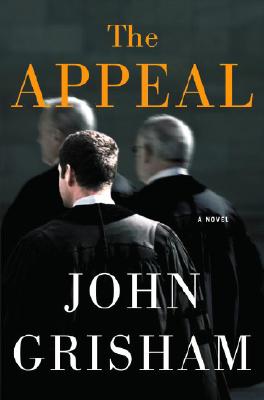
And today I finished reading his most recent work of fiction, The Appeal. Suffice it to say that I’m no longer a fan. My interest in his writing has dramatically waned, mainly stemming from the fact that I now find him bludgeoning me over the head with his personal point of view. When I read fiction, it’s for fun; I don’t want my entertainment to be wrapped around a heavy dose of someone else’s ideology. Whether I agree with his moral stance is immaterial: I’d rather be entertained by suspense, drama, and intrigue than be immersed in the intricate details of litigating and political campaigning from either side of the fence.

In short, I don’t think I’ll be anxiously awaiting Grisham’s next novel. Whether he goes the fiction or non-fiction route, I’m not enjoying the road he’s taking. And since I had been turning to his writing explicitly for the enjoyment of it, all reason for partaking in this “guilty pleasure” is now gone.
Monday, February 18

Goodbye to Google Reader

Well, it turns out that my stint with Google Reader only lasted a couple of months this time. I liked the fact that it was integrated with my other Google services, but the whole time it felt like I was making too many compromises... mostly because I couldn't see the actual post times of items and I couldn't see when items were updated.

It seems like Google Reader is a great solution for somebody who skims lots of RSS, but it just won't cut the mustard for somebody like me who follows all the content in a carefully selected list of feeds. Back to Bloglines I go... and the beta version of that service is getting pretty slick by now, too.

βloglines (Beta)

Monday, December 10

Google Reader, again (UPDATED)

It's been a long time since I last tried using Google Reader to keep track of news and blogs. There have been a lot of new features added since then, so I'm going to give it a go once more.

I imported all my feeds in from Bloglines, and the first thing I noticed is that Reader still timestamps items by when it reads them, not by the post time given in the feed. Since Reader only goes out to check your feeds intermittently, you end up with "clumps" of items posted between checks that are all given the same date and time. There's a great post about why this is bad here.

This was one of the reasons it didn't work out for me last time; hopefully it either doesn't bother me this time or the behavior is fixed to work more intelligently. Anyway, here goes...

UPDATE: I've already seen that the behavior has indeed been fixed to work more intelligently. The issue raised in the post I linked to above has been resolved, keeping items in the correct order even when a group is all grabbed at the same time. However, it would still be nice to see items timestamped with the actual <pubDate> from the feed and not Google's "scrape time." The only other issue I had in previous Reader attempts was seeing how it treats feed items that have updated or changed. There doesn't seem to be a per-feed setting for whether to show the item again when there's a new version (there is in Bloglines, which is a feature I really liked), so I'm still not *quite* sure whether Reader will stick with me this time.

Google Reader

P.S. Mihai Parparita, this one's for you.

Friday, June 29

The Cult of the Amateur, by Andrew Keen

I have to get a copy of this book (unfortunately it's not in the local library, at least not yet):

“What you may not realize is that what is free is actually costing us a fortune,” Mr. Keen writes. “The new winners — Google, YouTube, MySpace, Craigslist, and the hundreds of start-ups hungry for a piece of the Web 2.0 pie — are unlikely to fill the shoes of the industries they are helping to undermine, in terms of products produced, jobs created, revenue generated or benefits conferred. By stealing away our eyeballs, the blogs and wikis are decimating the publishing, music and news-gathering industries that created the original content those Web sites ‘aggregate.’ Our culture is essentially cannibalizing its young, destroying the very sources of the content they crave.”


The Cult of the Amateur - Andrew Keen - Books - Review - New York Times

Thursday, April 12

Why Not to Read Dan Brown

I've never read The Da Vinci Code, and the following post at Language Log makes me very glad I skipped Dan Brown's "thriller" altogether. As an editor and something of a language purist, I'm shocked beyond belief at even the minor snippets shared by blogger Geoffrey K. Pullum.

(By the way, the analysis Pullum provides is almost perfect... only once did I have to re-read a sentence, which is my standard measure of unclear phraseology.)

Language Log: The Dan Brown code

Creative Commons License
This work is licensed under a Creative Commons Attribution-Noncommercial-Share Alike 3.0 United States License. Permissions beyond the scope of this license may be available by emailing the author (use the link above).


The Geek Code desperately needs updating, but in any case here's mine (as of 2010-02-28):

-----BEGIN GEEK CODE BLOCK-----
Version: 3.12
GIT/MU d+(-) s:+>: a C++> ULXB++++$ L+++ M++ w--() !O !V P+ E---
W+++ N o++ K? PS PE++ Y+ PGP t !5 X- R- tv+@ b++ DI++++ D--- e*++
h--- r+++ y+++ G+
------END GEEK CODE BLOCK------


If you really care about knowing what that all means, you either know the code already, or you can get it decoded for you here.